
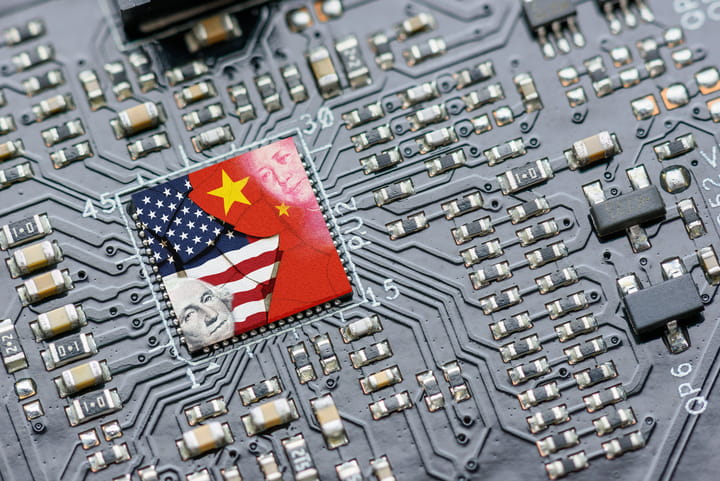
Following last week’s bilateral summit in Beijing, the White House announced limited progress on rare earth export restrictions. While the agreement addresses shortages in yttrium, scandium, indium, and neodymium, it tacitly acknowledges a harder reality: China’s export control regime is here to stay.
M2i Global recognizes this moment as a critical inflection point in U.S. supply chain strategy: diplomatic gains are valuable, but they cannot replace domestic midstream infrastructure.
The Deal’s Scope And Its Limits
According to Reuters reporting on the summit outcomes, the White House statement notably dropped earlier language calling for the “elimination” of China’s export controls. Instead, the latest fact sheet indicates China will “address U.S. concerns” about shortages of critical minerals and rare earths, including yttrium and scandium. Both are essential for aerospace and semiconductor manufacturing.
The agreement also touches on export restrictions affecting rare earth processing technology, where China maintains near-total dominance. However, Reuters noted that China’s own Ministry of Commerce made no mention of rare earths in its parallel summary, signaling diplomatic caution on both sides.
The Indium Problem: A New Vulnerability Surfaces
For the first time, the White House highlighted indium as a critical shortage area. This signals deepening U.S. concern over semiconductor supply chain resilience.
Indium plays a crucial role in next-generation photonic chips that use light instead of electricity for data processing, as well as high-speed optical lasers for optical fiber and 6G networks. According to Reuters analysis, indium phosphide is essential for these advanced components. Chinese exports of indium have fallen dramatically since Beijing added it to export control lists in February 2025, down by approximately two-thirds globally and 77% to the United States.
Manufacturers like Coherent, which holds 40% of the global market share in indium phosphide optical components, face potential allocation delays and higher input costs if licensing remains slow or politically contingent.
Why Diplomatic Wins Are Not Enough
The White House achievement is real but narrow: securing nominal commitments to “address” shortages in specific materials. What the agreement does not do, and what Reuters’ reporting makes clear, is remove the structural vulnerability that has plagued U.S. supply chains for decades.
As one analyst with research firm Trivium China quoted in the Reuters piece noted, “the gap in this case is not ideal, but fine,” provided both sides signal credible interest in stability. But stability through diplomatic negotiation is fundamentally different from resilience through domestic capacity.
Here’s the distinction: China’s export controls were introduced in April 2025 and remain the baseline of the global rare earth market. They may be selectively loosened for certain sectors (autos, consumer electronics) while remaining tight for sensitive applications with military implications. That means:
- Aerospace companies continue facing yttrium shortages for heat-protective aircraft engine coatings
- Semiconductor manufacturers report scandium scarcity for chip production
- Photonic chip producers confront indium allocation delays
- Companies in sensitive sectors experience persistent licensing bottlenecks
Diplomatic agreements can improve the margin. They cannot eliminate the leverage.
The Midstream Infrastructure Imperative
M2i’s core thesis has never been more relevant: the United States must build domestic and allied midstream processing capacity to reduce dependency on Chinese export control regimes, regardless of diplomatic progress.
M2i is actively developing processing capabilities across critical mineral verticals—from rare earths to indium-family materials—anchored in:
- U.S.-based processing and refining infrastructure that reduces reliance on Chinese separation and purification
- Tracking and traceability systems that enable supply chain visibility and compliance across DPA, IRA, and defense programs
- Strategic partnerships with trusted allies (Australia, Japan, Canada) to diversify feedstock and processing hubs
- Integration with downstream manufacturing to create closed-loop supply chains that insulate critical industries from export control volatility
The White House summit demonstrates diplomatic engagement. But M2i’s infrastructure model demonstrates something more durable: operational independence.
What Comes Next
The Reuters reporting notes that a one-year truce on broader Chinese rare earth restrictions is due to expire in November 2026. The latest White House statement did not address whether this will be extended, which suggests uncertainty.
That uncertainty is precisely why M2i’s work matters. Rare earth supplies should not be subject to annual renegotiation. They should be produced domestically or through trusted allied networks with full supply chain visibility and compliance anchoring.
The May 2026 summit was a diplomatic moment. M2i’s infrastructure buildout is a strategic arc. Both are necessary, but only the latter ensures that aerospace, semiconductors, and defense systems operate with true supply chain resilience.
Read more on critical minerals diplomacy and trade: Reuters reporting on U.S.-China rare earth negotiations