
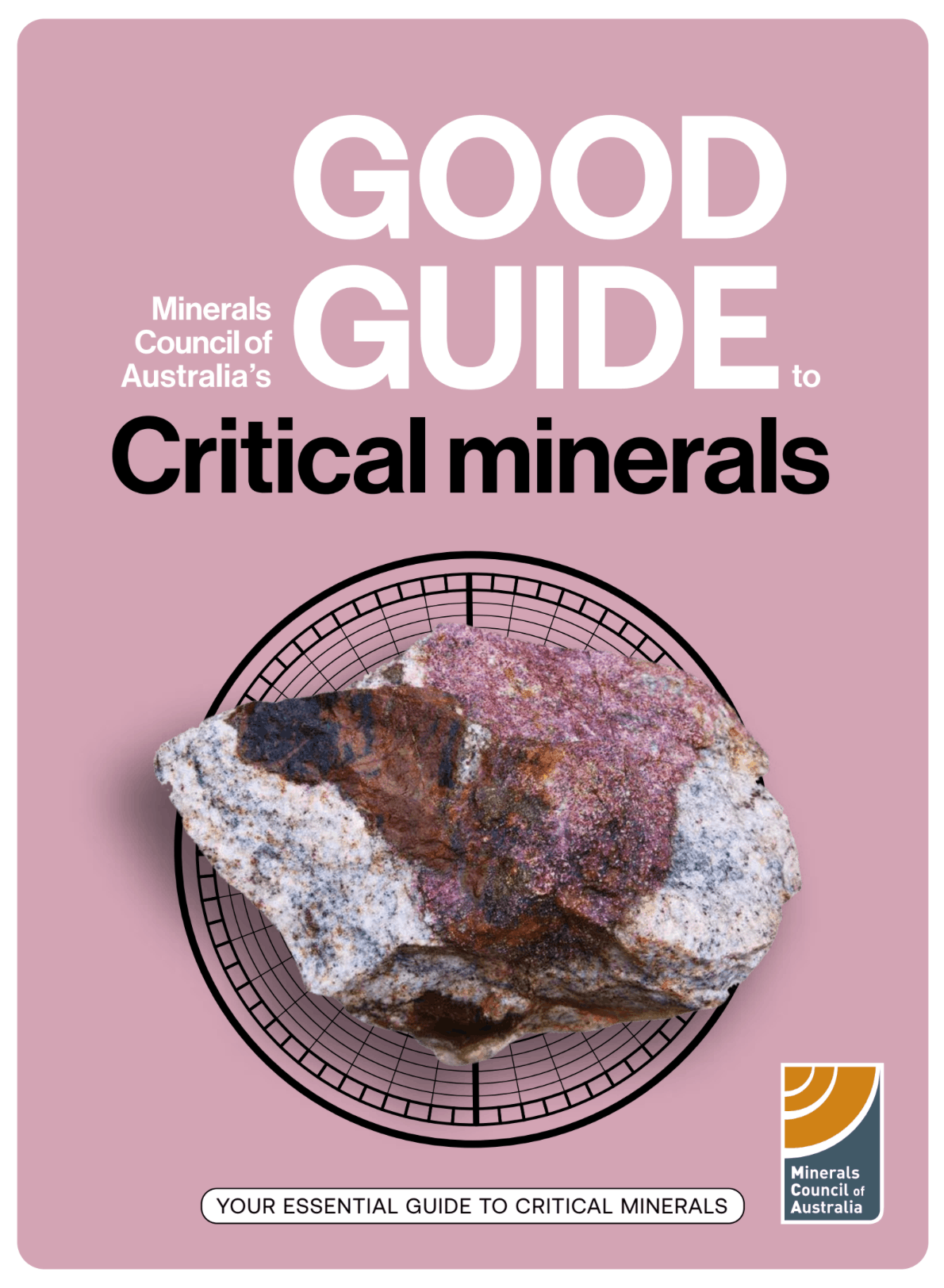
The Minerals Council of Australia’s Good Guide to Critical Minerals is essential reading for anyone serious about the future of the global energy transition, advanced manufacturing, and national defense. Released in early 2026, the Guide catalogs more than 50 minerals that governments across the United States, European Union, Japan, South Korea, Canada, and the UK have collectively designated as critical or strategic. It is not a policy wish list. It is a detailed, mineral-by-mineral accounting of where the world’s supply chains are concentrated, where they are fragile, and where the next generation of industrial infrastructure must be built.
The Structural Problem No One Can Ignore
The Guide’s most important message is structural. Finding minerals is not the problem. Processing and refining them is. From gallium and germanium to cobalt, graphite, and rare earth elements, the same vulnerability appears across nearly every profile: China controls the dominant share of global refining and processing capacity, not because it holds the largest reserves, but because it made deliberate, long-term investments in the infrastructure that turns raw ore into usable industrial inputs. The United States and its allies have consistently been late to that realization, and the Good Guide makes the cost of that delay impossible to ignore.
Secondary Supply Chains as a Strategic Lever
The document also highlights the growing strategic role of secondary supply chains. Mineral after mineral, it identifies end-of-life recovery and recycling as a critical lever for reducing import dependence and building supply chain resilience. Bismuth recovered from polymetallic by-products. Germanium extracted from zinc processing streams. Tellurium reclaimed from copper refining. The opportunity to recover critical materials from existing industrial flows is enormous, and the Guide frames it as both an economic opportunity and a national security imperative.
Where M2i Fits In
Why This Matters Now
The Good Guide closes with a clear message for industry and government alike: the nations and companies that invest in processing infrastructure today will define the terms of the clean energy economy tomorrow. The window to act is open, but it will not stay open indefinitely.
Read the original Good Guide to Critical Minerals: The Good Guide to Critical Minerals — Minerals Council of Australia
- Read the original Good Guide to Critical Minerals: The Good Guide to Critical Minerals — Minerals Council of Australia
- Explore our path forward
- Meet our leadership and team
- More updates from M2i Global